Economics addresses how information is paid for: digital advertising markets and their concentration, subscription and membership revenue, state subsidy and public broadcasting budgets, philanthropic funding, and the collapse of local advertising. Analysis quantifies the shortfall in specific markets and examines which replacement models have measurable results.
Economics addresses how information is paid for: digital advertising markets and their concentration, subscription and membership revenue, state subsidy and public broadcasting budgets, philanthropic funding, and the collapse of local advertising. Analysis quantifies the shortfall in specific markets and examines which replacement models have measurable results.
Small text ads once delivered a third or more of newspaper revenue at near-perfect margin, and the two-line listing's migration to vertical platforms took the industry's most profitable product with it.
Live sport propped up pay television for a decade while its fees tripled; streaming platforms inherited the escalation and discovered the same arithmetic the cable companies were fleeing.
Federal money flows through the Corporation for Public Broadcasting as two-year advance appropriations, deliberately insulated and deliberately contested — and it is a minority of the system's money.
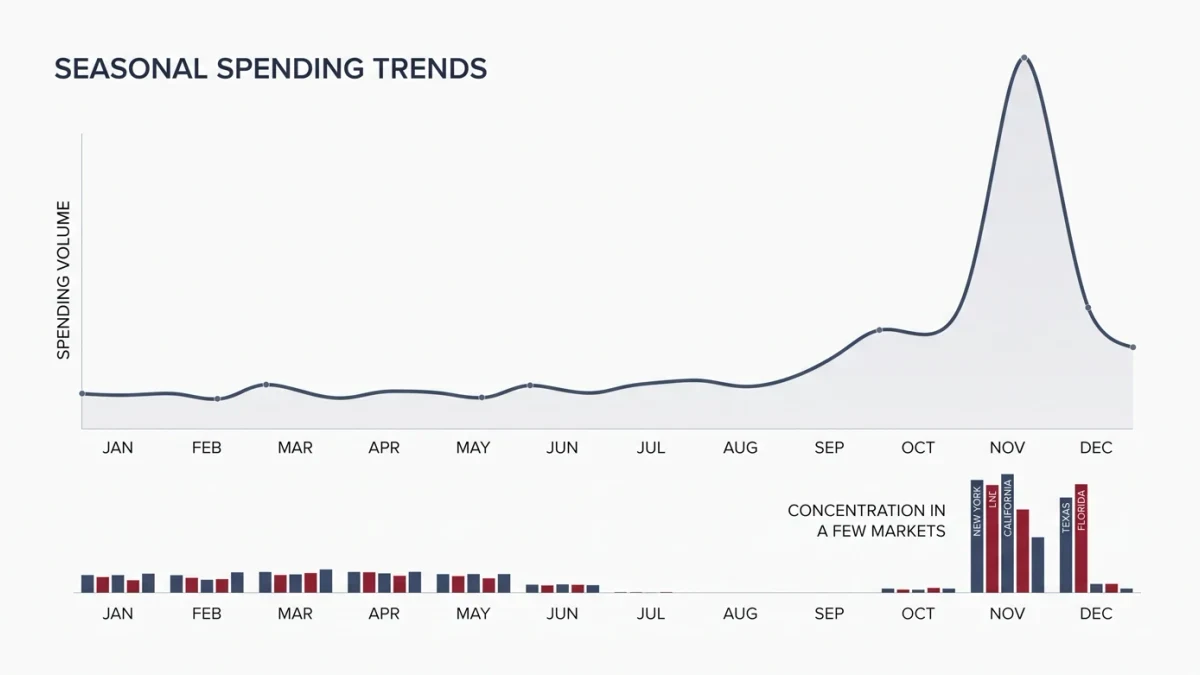
Presidential cycles now run past ten billion dollars in measured political advertising, and the money's destination — high-frequency battleground media, not national persuasion — explains both the prices and the silence elsewhere.
Donor-funded journalism expanded as advertising collapsed, but concentration among a few foundations, short grant cycles and political scrutiny are the model's three structural weak points.