Most arguments do not fail because people disagree. They fail because people stop hearing each other. Active listening is a small set of habits that keeps that from happening.
The idea is not new. Psychologists Carl Rogers and Richard Farson wrote the essay that coined the term. Researchers have kept studying the skill ever since. Studies of the practice point to a steady result: it builds trust and cuts down on misunderstandings.
What Active Listening Actually Means
Active listening is the act of intentionally engaging with communication. The listener does not sit quietly waiting for a turn to talk. The goal is to remove misunderstandings. It also makes thoughts, ideas, and feelings clear on both sides of a conversation.
That takes real effort. Most people overestimate how well they listen. The skill needs practice, like anything else that looks easy from the outside.
Three Moves That Do the Heavy Lifting
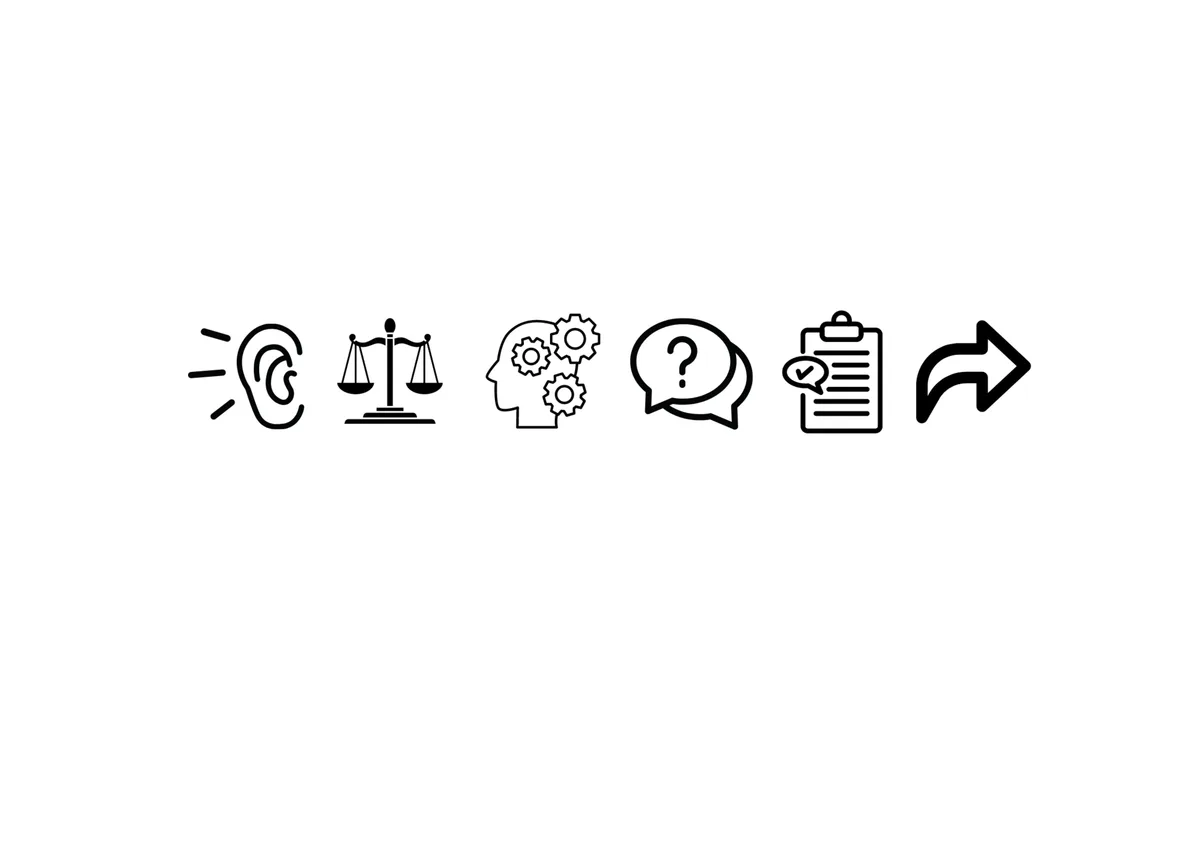
Three basic moves carry most of the weight.
- Paraphrasing means putting the speaker's message into your own words. It proves you understood. It also lets them correct you if you did not.
- Reflective emotion means naming the feeling behind the words, even one the speaker never said out loud. It validates their emotional state instead of ignoring it.
- Open-ended questions, such as "What did you think of that?", invite deeper answers than a yes or no can give.
Each move does a distinct job. Paraphrasing catches miscommunication early by checking accuracy. Emotion reflection builds empathy. Open questions deepen the talk instead of closing it down.
A short example shows how they chain together. A teammate says the new schedule feels rushed. You paraphrase: "So the timeline worries you." You reflect: "It sounds like you feel cut out of the plan." Then you ask: "What part would you change first?" The speaker now knows the message landed. Note what did not happen. Nobody debated the schedule yet. The speaker was still the subject of the talk. This connects to our earlier piece, How political ad-transparency libraries work — and where two still fall short.
The Physical Side of Attention
Attention has a visible shape too. Techniques include maintaining eye contact, minimizing distractions, and seeking clarification when something is unclear. Done together, they help a listener engage in an attentive and respectful way.
Comprehension comes first in the process. A listener has to absorb the message before responding to it. Skipping that step is where most conversations go wrong. People start drafting a reply while the other person is still talking. The reply then answers the wrong point.
Notice the pattern in the three moves. Each one is short. None of them interrupts. All of them hand the floor back. That is the whole trick. The speaker does the work. The listener makes space for it.
Where It Pays Off
Workplaces run on briefings, handoffs, and feedback. Couples run on money talks, plans, and small daily requests. In every setting, the same failure shows up. One side hears a claim and answers a different one.
Active listening slows the exchange down just enough. It keeps both people on the same claim. Managers use it in reviews. Teachers use it in class. Mediators, journalists, and doctors rely on versions of it. The setting changes, but the mechanics do not.
Now consider the usual alternative. Person A states a point. Person B starts a rebuttal mid-sentence. Both leave with a grievance and no shared facts. The topic was never the problem. The listening was.
Conclusion
Misunderstandings rarely announce themselves. They build quietly while two people talk past each other. Active listening interrupts that pattern with three simple moves: paraphrase, reflect, and ask. Add eye contact and fewer distractions, and the exchange changes shape. People who listen this way build trust and argue less. Few skills cost so little and return so much. Readers following this should also see Why election polls keep missing — according to the people who run them.