Most people who fall for a false story do not lack intelligence. They lack a habit. The habit that separates careful readers from careless ones is called lateral reading: leaving the page to check who is behind it, instead of digging deeper into the page itself.
This guide explains the mechanic, then the realistic outcome. Media literacy skills are learnable, and they take minutes, not semesters. The core move is simple: when a story surprises you, open a new tab and investigate the source before you investigate the claim.
First, a definition. Media is the set of channels and institutions that carry information to a large audience. Understand Media breaks that category into print, broadcast, digital, social, visual, interactive, advertising, and news media, each with different incentives and different failure modes. That matters for the reader: a wire story, a podcast, and a TikTok clip are not the same kind of object, and they should not be judged by the same standard.
What is lateral reading, and why does it work?
Lateral reading means checking a source by leaving it. You open new tabs and see what other pages say about the site, the author, or the organization. Professional fact-checkers do this as a reflex; most ordinary readers do the opposite, staying on the page and looking for internal signs of quality.
The reason it works is structural. Any page can look professional. Design is cheap, and a polished layout tells you nothing about who paid for it. What a page cannot control is what the rest of the web says about it. External consensus, or the visible absence of one, is harder to fake than a clean homepage.
According to The Tech Edvocate, media now shapes opinions as well as transmitting information, which is exactly why source identity matters more than presentation. If the goal of a piece is to move your view, the first question is who benefits when it does.
How do you check a source in under two minutes?
A practical routine, in order:
- Find the byline. Is there a named author? Search the name. Real reporters leave a trail of past work.
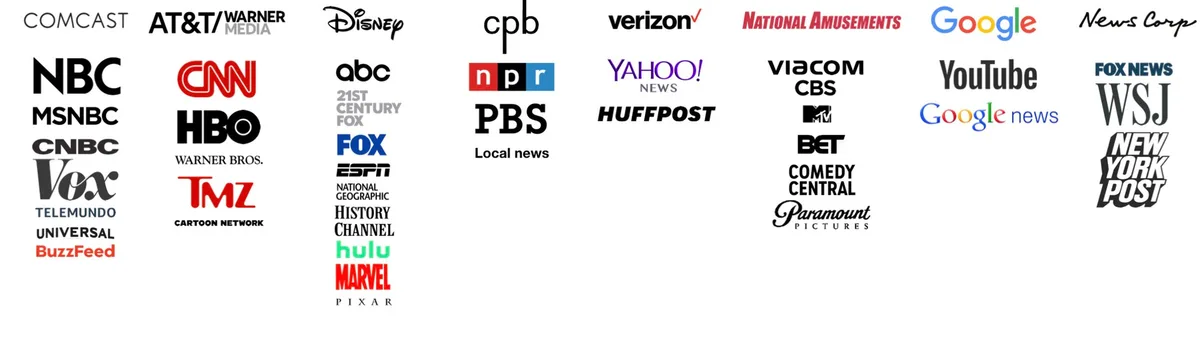
- Find the organization. Search the outlet's name plus words like "about" or "founded." Look for an ownership chain, not a mission statement. Our own reporting on who owns the news you read shows how far the real owner can sit from the masthead.
- Check the date. Old stories recirculate during new events. A story can be accurate about 2020 and useless about today.
- Trace the claim. If the story cites a study, a court filing, or a report, find the original document. If it cites no one, treat the claim as unverified.
- Look for a second, independent source. Two outlets repeating the same press release is not corroboration. Two outlets with separate reporting is.
None of this requires special tools. It requires the willingness to leave the page you are on.
What should you do when a story makes you angry or thrilled?
Strong emotion is the signal to slow down, not speed up. Content engineered to provoke spreads because provocation is cheap to produce and expensive to resist. The realistic outcome of an emotional story is not that it is false; it is that you are the least skeptical you will be all day at exactly the moment skepticism matters most.
So invert the instinct. The more a post demands immediate sharing, the more it deserves the two-minute source check above. This applies across the political spectrum. Anger at your opponents and satisfaction at your allies are the same vulnerability, sold by different sellers.
How do you read a news story versus an opinion piece?
News and opinion are different products, and conflating them is a common failure. A news story should be built on named sources and documents. An opinion piece is an argument, and it is allowed to argue. Neither is dishonest by category; the problem is reading one as the other.
When you land on a piece, classify it first: is this reporting, analysis, or advocacy? Then apply the matching test. Reporting gets checked for sourcing. Analysis gets checked for whether the reasoning holds. Advocacy gets checked for who is paying. Cambridge Dictionary usage examples show how loosely the word "media company" gets applied, which is a reminder that labels on the page often obscure more than they reveal.
For a view of how one platform category changed the news diet of millions, see our coverage of TikTok becoming a mainstream news source. Short-video news strips away most of the cues readers rely on: no byline, no masthead, no corrections box. That makes lateral reading more important, not less, on those platforms. We covered a connected angle in Who owns the news you read? Tracing the chain from masthead to holding company.
What are the limits of these habits?
Honest limits, stated plainly:
- Lateral reading reduces your risk. It does not make you immune. Skilled operators build real-looking histories, and even careful readers get caught.
- Checking sources takes effort, and nobody does it for every headline. Spend your skepticism where stakes are highest: claims you might repeat, votes you might cast, money you might spend.
- You will sometimes reject a true story because its source looked weak. That is the cost of the habit, and it is smaller than the cost of the alternative.
Our analysis is that the biggest single upgrade for most readers is not a new tool but a new default: the new tab. When something moves you, the tab you open next tells you more than the page you are on.
Where media literacy fits in the bigger picture
Individual habits are one layer. The information environment is also shaped by ownership structures, platform policy, and enforcement decisions, which is why our policy coverage tracks the rules alongside the reader-side skills. Fact-checking infrastructure itself has been shifting; see our reporting on where fact-checkers stand after Meta stepped back. And when a platform's conduct crosses into regulation, the record lives in filings and fines, such as Ireland's fine against TikTok over children's accounts. Readers following this should also see Ireland's data regulator fined TikTok €345 million over children's accounts.
The closing takeaway: media literacy skills are a personal defense in a system you do not control. Lateral reading, source tracing, and emotion-triggered skepticism will not fix the information environment. They will fix your part in it, which is the only part you can reach.