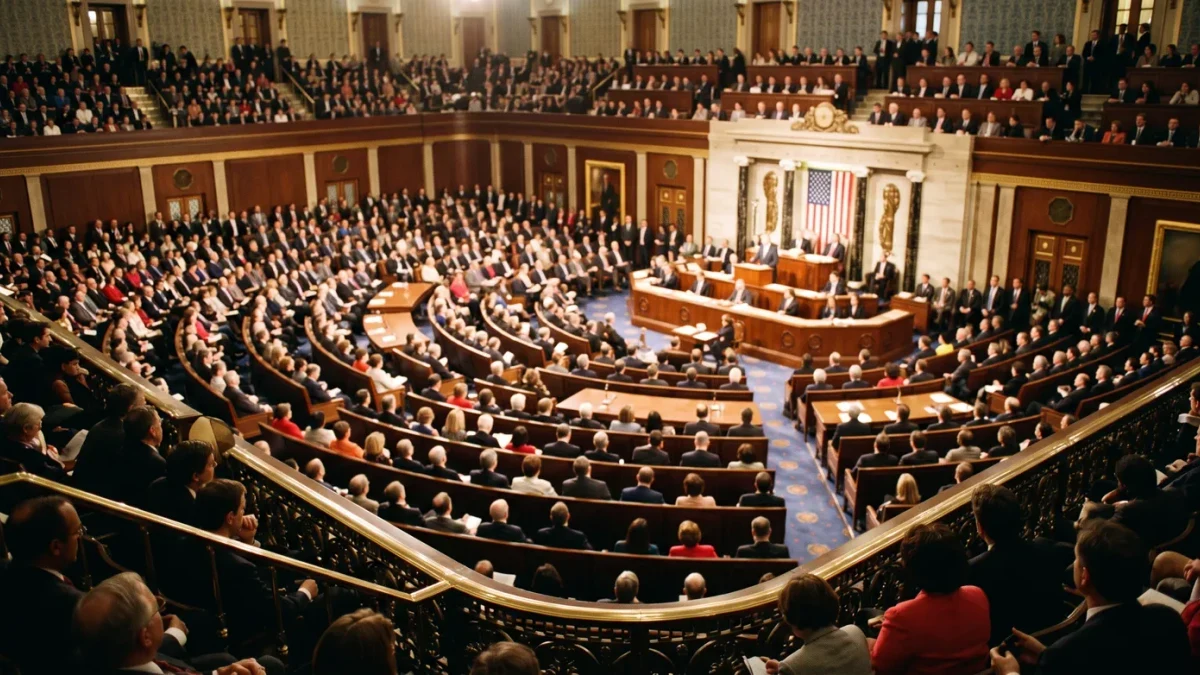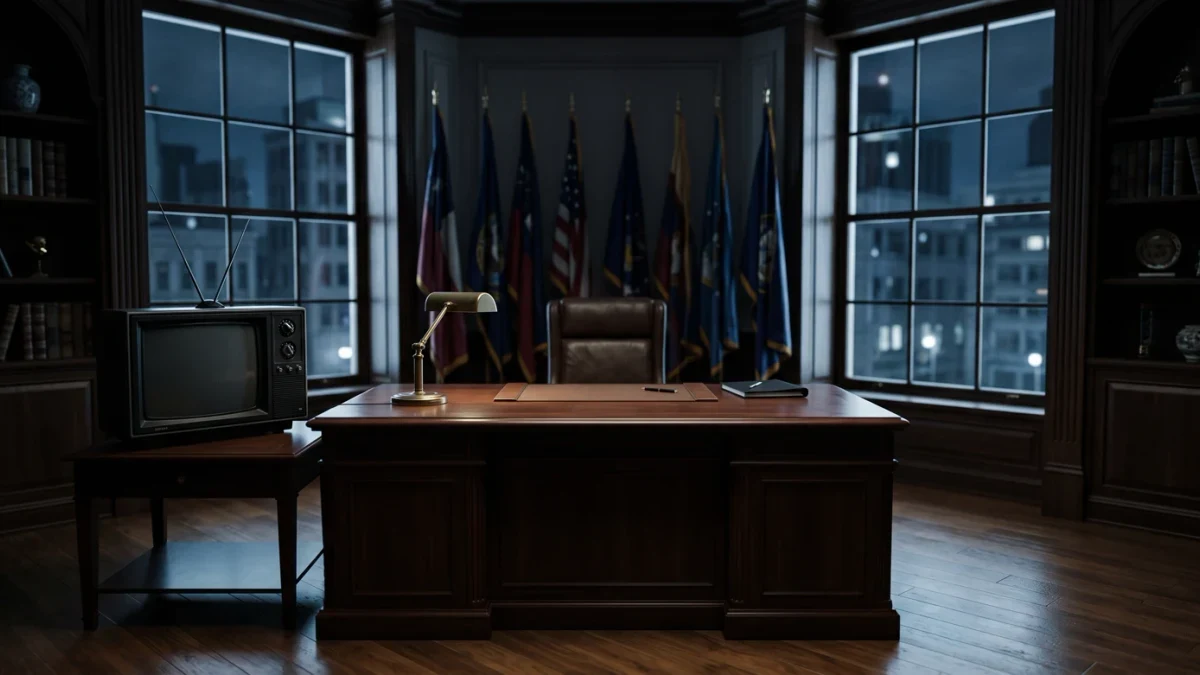
The televised presidential address is a format in structural decline, and the numbers tell it plainly: an Oval Office prime-time speech that drew 30 to 50 million viewers across the broadcast networks in the 1980s and 1990s — Nixon's 1969 Vietnam address drew a reported audience near half the country — reached audiences in the low tens of millions in the 2010s and single-digit-to-low-tens across all platforms since, with recent State of the Union broadcasts drawing their smallest modern audiences amid fragmentation. The mechanism is arithmetic: the address is a single program competing for a public that no longer shares channels, delivered through an appointment ritual — the networks preempting entertainment at the president's request — whose scarcity was the source of the format's power. Neither the office nor the speech changed; the audience's arrangement did.
How did the request mechanism actually work?
Through a norm, not a law. There is no statutory right to network time; the White House requests it, the networks grant it or occasionally negotiate, and the Federal Communications Commission's history includes the fairness-era practice that gave candidates response time after presidential addresses — a doctrine dismantled in 1987 with the fairness doctrine itself. The networks' acquiescence was a bargain: public-service standing, ratings guarantees, and the prestige of the national moment. Each element decayed on a different schedule — prestige held longest — and by the mid-2010s the calculus had reversed: preempting popular prime-time programming for a political speech costs advertising revenue and delivers a diminishing event, so networks began choosing selectively, and White Houses began choosing alternatives.
What replaced the prime-time address?
A distributed toolkit with opposite properties. The social post reaches whoever the algorithm and the newswires amplify, instantly and unedited — no network introduction, no opposition response by custom, no preempting anything. The targeted interview — a podcast, a friendly show, a local station — reaches a chosen audience with chosen framing. Streaming and official channels carry the full speech to the engaged without asking anyone's permission. What the replacements surrendered is exactly what the prime-time address provided: the involuntary audience. The old format's power was that it commandeered the nation's single attention infrastructure; the new formats rent attention from audiences already inclined. A president can now speak more often, more controllably, and to fewer people at once — which is the trade every institution of the broadcast era has made.
Does the decline matter politically?
Less than the elegies suggest, more than the successors admit. Research on presidential rhetoric finds the addresses' persuasive effects modest even in their heyday — mostly reinforcing prior views while performing gravity for a crisis — and modern presidents' approval bumps after major addresses are small and brief. What measurably weakened is the coordination function: moments when every channel carried the same presidential framing created a shared civic clock — the country knew it had been addressed — and successor communications create no equivalent common experience. The political communication literature treats this as part of the broader fragmentation of political attention: not that persuasion died, but that persuasion now happens in parallel channels that never intersect.
Where does the format still work?
In genuine emergencies, briefly. The documented pattern: when an address responds to a real, developing crisis, audiences across platforms assemble — cable, streaming, social clips — and the event recovers some of its old scale, because demand for authoritative simultaneity spikes. When the address is strategic — a repositioning speech, a thematic pivot — the audience is whoever was already persuaded, and the event functions as messaging theater for the engaged. White Houses have internalized the distinction: the request-to-networks ritual is reserved for moments with genuine claim to national attention, and everything else goes out as a post.
What should observers conclude?
That the prime-time address is now an instrument of last resort, not first — the presidency's megaphone preserved for moments when the country actually wants simultaneity, and largely bypassed otherwise. The norm's remnants (networks still say yes when asked; the opposition response still follows by custom) are worth noticing precisely because they are norms: nothing but practice holds the mechanism in place, and each skipped cycle makes the next skip easier. The office did not lose the ability to command the nation's attention; it lost the infrastructure that made commanding it a phone call.