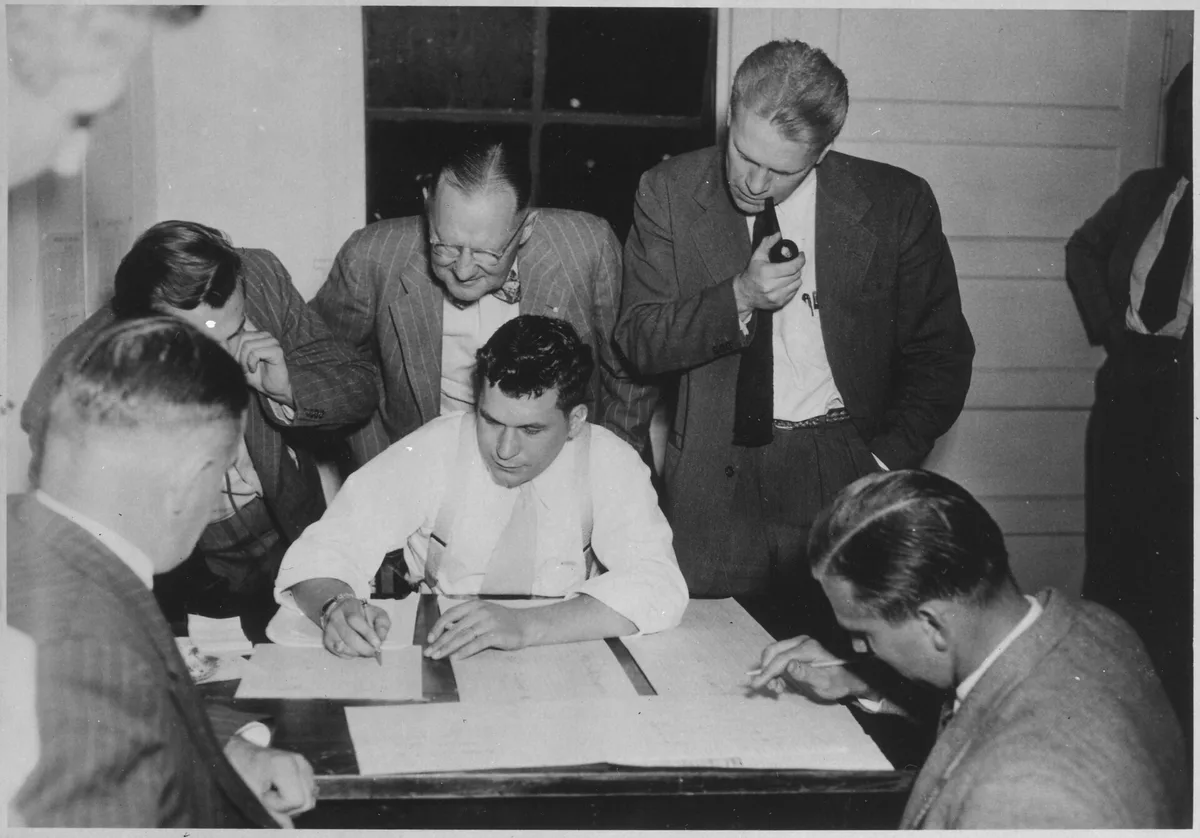
Picture a high school classroom at 8 a.m. on a Saturday. Two students sit across a table, shuffling stacks of paper covered in highlighter. One of them is about to read, in a single breath, a sentence that would exhaust most people at half the speed. This is a policy debate round — a competitive format in which two-person teams argue for and against a specific government action, and the argument is won or lost on evidence, logic, and time management.
The name can confuse people. In this setting, "policy" borrows its ordinary meaning: Merriam-Webster defines a policy as "a definite course or method of action selected from among alternatives" to guide present and future decisions. That is exactly the shape of a debate round. One team proposes a course of action. The other team argues the alternatives are better, or the risks are worse, or the whole premise is flawed.
Why cover it here? Because policy debate is a training ground for the habits this site watches in professional form: weighing evidence, defining terms, testing claims against consequences. The students arguing about a federal water rule this weekend may be the staff members writing the actual rule a decade from now. Understanding how the format works makes the skills — and the shortcuts — visible. Readers following this should also see A federal reporter shield law keeps almost passing — here is where it actually stands.
What does a policy debate round look like?
A round has two teams of two: the affirmative team, which supports a change, and the negative team, which opposes it. Each debater gives a series of scripted speeches alternating with unscripted cross-examination periods, where the opposing side can ask direct questions. A neutral judge, sometimes a coach, sometimes a trained community volunteer, ranks the teams and explains the decision afterward.
The speeches follow a fixed order. The affirmative opens with a constructive speech laying out its case. The negative answers, then the affirmative rebuilds, and the round moves through rebuttal speeches where earlier arguments are extended, weighed, and discarded. Constructive speeches build arguments; rebuttals compare them. Time limits are strict, and running out of time mid-argument is a real cost, which is one reason the format rewards preparation so heavily.
Between speeches come cross-examinations. These are short, one-debater-to-one-debater exchanges, and they matter. A well-timed question can pin an opponent to a definition or a number that another speech will later exploit. Skilled debaters use cross-examination not to score points in front of the judge but to set traps for their partner's next speech.
What is the affirmative actually defending?
The affirmative does not just argue that something is bad. It defends a plan — a specific, written proposal for what a government actor should do. The plan usually has planks: who acts, what they do, how it is funded, and how it is enforced. This specificity is the format's signature. A vague complaint that "the government should do more" loses to a plan that names an agency and a mechanism.
That specificity is also where the intellectual work happens. The affirmative must show the plan solves the problem it identifies, and that the benefits outweigh the costs. The negative then attacks on multiple fronts: the problem is not real, the plan will not fix it, the plan creates new problems, or the plan's assumptions are wrong. Every claim is supposed to trace back to evidence — quoted experts, studies, or official documents — read aloud in the round.
This mirrors how real policy analysis works. The CDC's policy training materials describe policy as a law, regulation, procedure, administrative action, incentive, or voluntary practice, and stress that policy decisions show up in resource allocations. Debate plans borrow the same anatomy: an actor, an action, a mandate, a budget line. Students learn to ask of any proposal what an analyst would ask — who pays, who complies, who enforces.
What is a counterplan, and why does the negative get to propose one?
Here the format surprises newcomers. The negative team is not limited to saying no. It can offer a counterplan — an alternative course of action — and argue that its alternative is better than the affirmative's plan. If both would help, the negative wins by showing its option is preferable.
Counterplans create one of debate's most technical arguments: the competition question. For the counterplan to count, it must be a genuine alternative, not a plan-plus-additions. Debaters argue over whether the two proposals could coexist or whether choosing one means rejecting the other. There is also the permutation, an affirmative argument that you could do both, which the negative must anticipate.
Defenders of the format say this teaches comparative thinking: real legislatures choose among alternatives, so a debate that only allows yes-or-no misses the actual decision. Critics counter that counterplans can drift far from the original topic, turning rounds into abstract games. Both points have force, and different judges weigh them differently — which is part of why the activity rewards adaptability.
Why do debaters talk so fast?
The rapid-fire delivery, called spreading (short for "speed reading"), is the format's most visible oddity. The reason is arithmetic. Each speech has a fixed time limit, and the amount of evidence and argument a team wants to deliver exceeds what conversational pace allows. Speaking faster packs more claims into the same window, and the opposing team must answer every claim or concede it.
Judges who accept fast delivery take flow notes — a shorthand transcript of every argument — and expect the round to end with a clear tally of what was proven and what was dropped. Dropping an argument, meaning never answering it, is treated as conceding it. That rule is what makes speed rational: unanswered claims accumulate.
The practice draws real criticism, including from within the debate community. Some judges reject spreading and enforce a conversational pace. Others argue that rapid delivery filters out students without coaching resources to teach it. The activity has no single answer, and tournaments often publish judges' preferences in advance so teams know the expectations before they speak. The honest summary: speed is a strategy, not a requirement, and the room you draw shapes the round.
What does this mean for how the rest of us argue about policy?
Our analysis: the format's most transferable lesson is the burden structure. In a round, someone must prove the change is net beneficial, and someone must either beat that proof or show an alternative beats it. Public policy debate, by contrast, often floats free of any such structure — claims about a regulation's effects circulate without anyone being obligated to defend them against alternatives. Watching a round, even a fast one, shows what accountability for a claim looks like when a timer is running.
That habit of comparing alternatives, not just attacking a proposal, is worth importing into everyday reading. When a platform rule, a broadcast regulation, or a speech law is debated, the useful questions are the debate questions: compared to what? Who implements it? What happens to the people who do not comply? Readers who want to see those habits applied to real rules can start with how the debate over Section 230 skips the statute's actual twenty-six words, or with this site's broader coverage of policy. The skills overlap more than the settings do. We covered a connected angle in Section 230 is twenty-six words, and most of the debate skips them.
The evidence base for debate's civic benefits is thinner than its advocates sometimes suggest, and this article makes no research claim about outcomes. What the format demonstrably requires, on its face, is evidence citation, comparative reasoning, and answering your opponent's strongest argument rather than the weakest. Those are testable habits, and they are the reason the Saturday-morning classroom is worth watching.