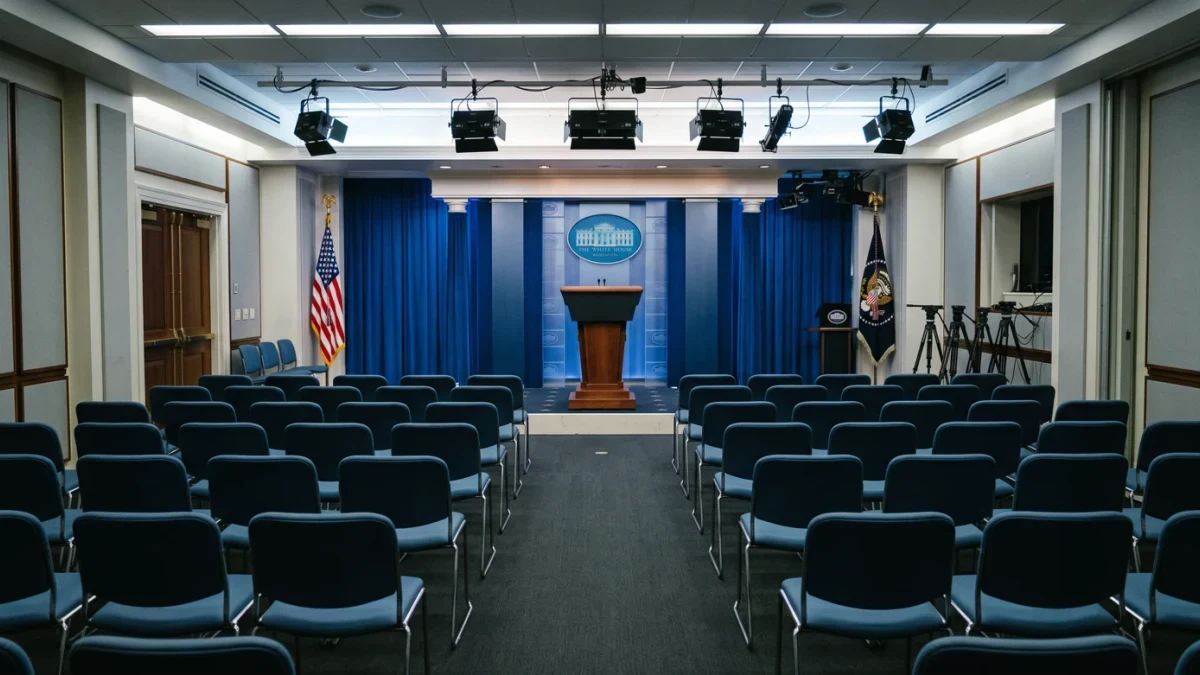
The White House's Office of Communications now publishes the weekly press pool rotation itself — the January 12–19, 2026 rotation was posted by the White House, not the White House Correspondents' Association — completing a transfer of authority that began in February 2025 when the administration stripped the WHCA of its decades-old role deciding which reporters cover the president in the Oval Office and aboard Air Force One, as reported by the BBC at the time. For an institution whose access rules had been set by journalists since the pooling system's mid-20th-century origins, the change is structural, not ceremonial: the body that once allocated the seats now has no formal role in allocating them.
Two related changes define the new arrangement. Under a media policy announced in 2025, the White House ended the permanent pool spots long held by the major wire services — the Associated Press, Bloomberg and Reuters — placing them in the shared print rotation instead, sharply curtailing their guaranteed access to the president, per the AP's own account of the policy. And reporters' walk-in access to the press secretary's and communications office suites has been limited to prior appointments, according to Wall Street Journal reporting on the West Wing access rules. The AP, it should be noted, was earlier involved in litigation over access after disputed restrictions; a federal judge ruled in 2025 that the government could not exclude a news organization from pooled events based on its editorial choices, and the new rotation system operates in the shadow of that ruling.
Why does the pool matter more than the briefing room?
The pool is the mechanism that covers the president where space does not allow all press — the Oval Office, Air Force One, unannounced trips. Its written accounts, shared with the entire corps through the wire-style distribution the WHCA long coordinated, are the raw feed of presidential coverage for outlets that cannot be present. Whoever sets the rotation therefore controls the mix of witnesses at the moments least amenable to staged communication, which is precisely why the association's role was worth taking and worth defending in court.
What did other coverage of the rotation change miss?
Most accounts treat the wire services' loss of permanent slots as a dispute among elites. The underreported consequence is distributional: wire pool reports are the pool product that thousands of smaller outlets — local papers and broadcasters with no Washington bureau — republish verbatim. Shrinking the wires' presence shifts the burden of eyewitness coverage onto television and larger print outlets whose reports are not comparably redistributed. The White House rotation, viewed that way, is not only about which reporters see the president; it is about what version of the sighting reaches readers in markets whose own coverage of the presidency consists almost entirely of a wire feed.
The correspondents' association says it continues to advocate for access and to service pool reports regardless of who sets the roster; the White House frames the change as an expansion of the outlet mix beyond a self-selected few. Both can be true. What is no longer in dispute is who holds the pen: the January 2026 rotation carries the White House's letterhead, and the association's remaining leverage lies in the courts, in its members' independent reporting, and in whatever norms survive the transfer.