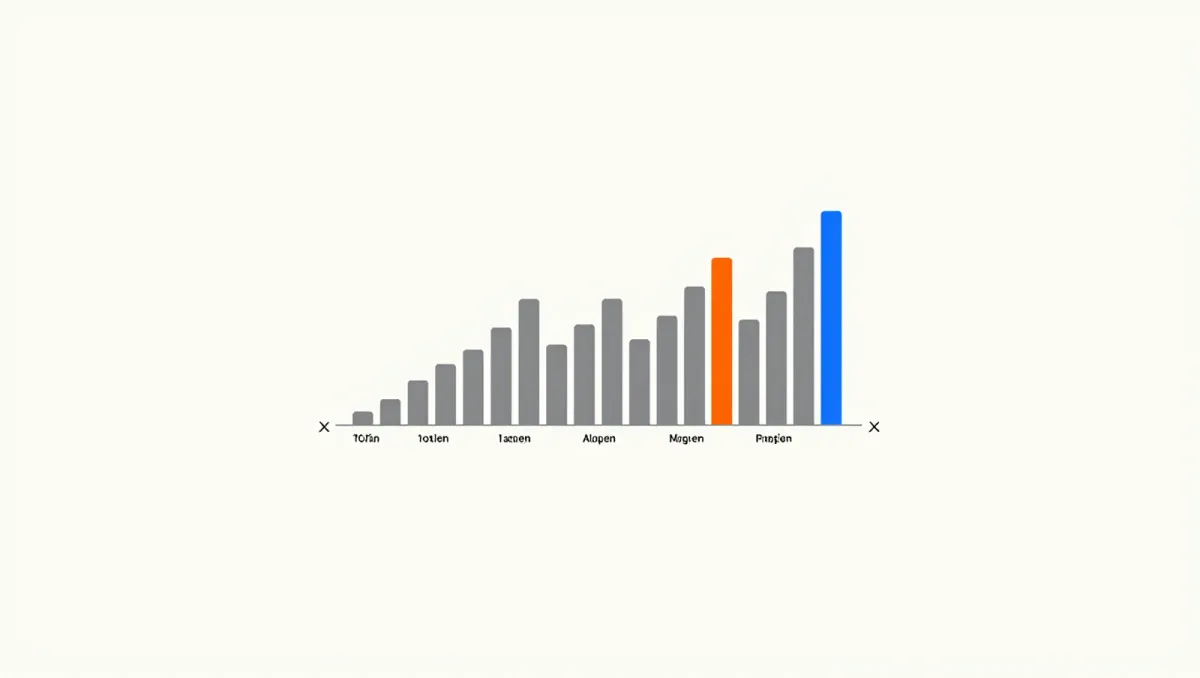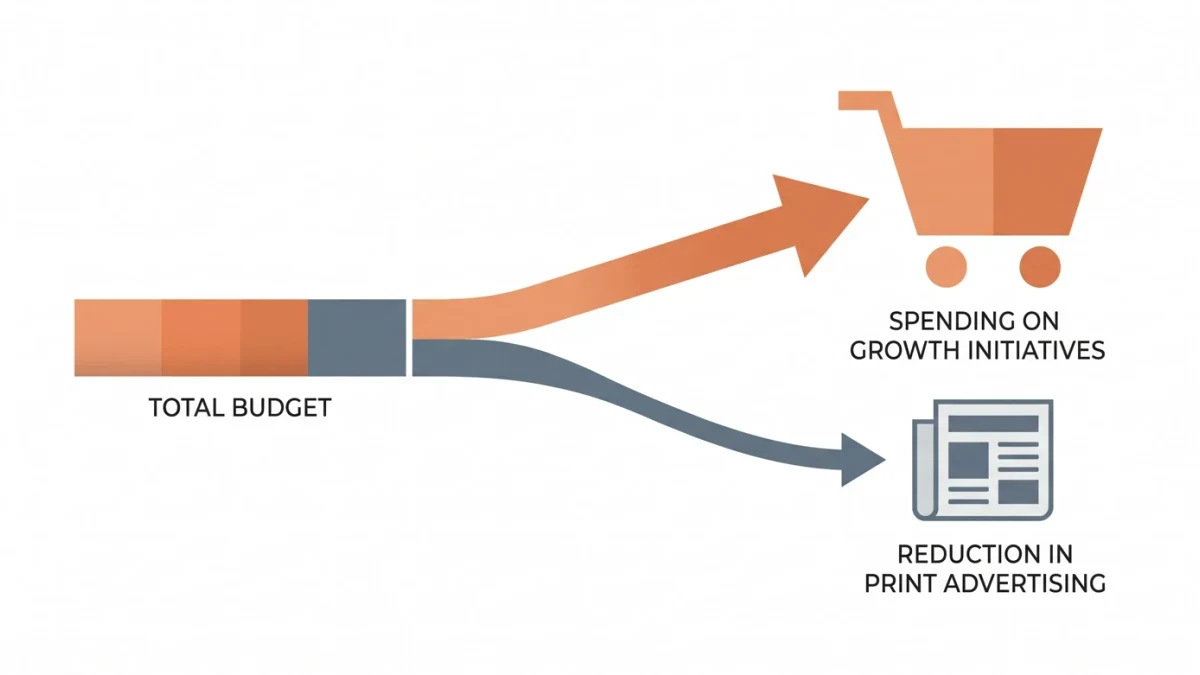
Retail media is the fastest-growing large advertising channel in the world, and it grew by solving the exact problem news publishers never could. The channel — advertising sold by retailers against their own shopping data and on-site inventory, with Amazon as the dominant player and Walmart, Instacart, Kroger and international challengers behind — is projected by the standard forecasters (GroupM, eMarketer) to rival or exceed television advertising globally, with Amazon's ads business alone reporting revenue in the tens of billions annually in its disclosed segments. The draw is closed-loop measurement: a retailer knows what its shoppers bought, serves them an ad, and observes the purchase — an attribution chain from impression to checkout that no news website, with anonymous readers and no sales data, can offer.
Why is closed-loop targeting so decisive?
Because it changes what an ad is worth. A publisher's advertising pitch historically sold adjacency — attention in a quality context — priced through proxies (impressions, demographics, panels). Retail media sells outcomes: the advertiser pays against sales it can see. In any budget negotiation, the measurable dollar beats the contextual dollar unless the contextual dollar proves superior incrementality — and publishers lack the data to prove it. The consequence documented across agency budget surveys is structural reallocation: performance budgets flowed to retail media first, then brand budgets followed the shoppable-video and streaming-TV partnerships the retailers built, with Amazon expanding its ad business into Prime Video inventory — ad-supported streaming sold with shopping-graph targeting, the exact hybrid of the two strongest ad products of the decade.
What does this do to news publishers specifically?
It removes their remaining differentiated ad claim. Publishers watched search and social take intent and identity respectively; retail media took conversion, the last and most defensible piece of the advertising value chain. News inventory now competes for brand budgets against measurable alternatives on one side and against premium streaming on the other, while carrying the brand-safety discount applied to journalism. The publisher responses in practice: contextual selling rebuilt around first-party data (registration walls converting anonymous readers into known ones), commerce content and affiliate revenue (participating in the purchase rather than watching it), and partnerships that pipe publisher audiences into retail-media-style measurement — the emerging class of deals in which publisher first-party data matches retailer sales data to prove incrementality. Each response is an attempt to manufacture the attribution the channel was born with.
Is retail media's growth sustainable?
Its own honesty problems suggest limits. The channel's measurement is closed-loop inside each retailer — a walled garden — and cross-retailer comparison is impossible; advertisers cannot easily tell what Amazon's attribution would look like under an independent counter. The trade press and agency analysts have documented rising scrutiny of retail media's fees, its take rates on vendors (much retail media spend is manufacturers paying for placement, functioning as a margin tax on suppliers), and ad load degrading the shopping experience. None of these has dented the growth line yet, because the underlying asset — purchase data — remains uniquely valuable, and every large retailer has followed Amazon into selling it.
What is the strategic endgame for publishers?
A smaller, more honest advertising business. The realistic publisher ad stack of the late 2020s: first-party-data targeting sold on registered audiences, high-impact formats that walled gardens cannot reproduce, event and sponsorship revenue, and commerce-adjacent monetization where editorial legitimately touches purchase decisions — plus the subscription revenue that made advertising optional in the first place. What publishers should not do is chase the channel's mechanics with third-party data workarounds: the identifier economy those depend on is precisely what privacy regulation and browser changes dismantled.
The retail media story is, finally, a story about what advertising became: a data business where distribution is the substrate and measurement is the product. News publishers still own distribution of something scarce — attention in contexts people trust — and the industry's commercial task is pricing that scarcity without the data apparatus the winners have. Some will manage it. The arithmetic says most will lean on readers instead, which is why the paywall decade and the retail media decade are the same decade.
Could regulation change the balance?
Only at the margins, and mostly on the data side. Privacy regulation that weakens cross-site tracking hurts retail media less than publishers fear — retailers' first-party purchase data is consented at checkout in a way third-party tracking never was — so the privacy wave's actual effect has been to advantage retailers further, an irony worth marking. Antitrust scrutiny of Amazon's ad business proceeds on marketplace-conflict theories, and the state-level antitrust cases include advertising-tying claims; outcomes there would shape terms for vendors, not resurrect publisher attribution. The one lever squarely aimed at the imbalance is the emerging market for data partnerships and clean rooms, where publishers pool first-party signals with retailer sales data — an industry-built answer rather than a regulatory one, which is probably the realistic kind.